3:47 AM. Ugh. This again?!?!?
You're staring at the ceiling, desperately wanting to be conked out and deep in Dreamland. But instead, you're mentally scrolling through tomorrow's to-do list, your body's so tired, and your brain just won't shut off.
Sound familiar?
If so, you're far from alone. A majority of Americans — 57% — say they'd feel better if they got more sleep, and the average American now clocks just 6.5 hours a night.[1] That's not just annoying. It's a health crisis hiding in plain sight. As neuroscientist Dr. Matthew Walker, author of Why We Sleep, puts it: "The shorter your sleep, the shorter your life."[2]
So what are people doing about it? Many are turning to an ancient remedy that's finally getting modern scientific validation: cannabis. Its use as a sleep aid goes back a very long way — by 1890, Sir John Russell Reynolds, Queen Victoria's own physician, was calling it "one of the most valuable medicines we possess," and rating it especially highly for the sleeplessness of his older patients.[3]
But here's the thing — not all cannabis helps you sleep. And the way most people use it? A lot of them are doing it wrong. As the latest research reveals, cannabis can meaningfully improve sleep — but mostly when you use the right compounds, at the right doses, at the right time. Read on to discover what actually works.
Why Conventional Sleep Aids Are Failing You
Before we get to what works, it's worth understanding why most sleep aids don't.
Over-the-counter options like diphenhydramine (Benadryl, ZzzQuil) and doxylamine (Unisom) were never designed as sleep aids — they're antihistamines whose drowsiness side-effect got repurposed for sleep. Sure, they'll knock you out. But they'll also leave you foggy, dry-mouthed, and groggy the next morning, and with regular use your body adapts, so you need more for the same effect.
Prescription meds like zolpidem (Ambien) and eszopiclone (Lunesta) carry heavier concerns — sleepwalking, sleep-eating, blackout episodes, and physical dependence that makes them hard to quit.
Then there's what a striking 2025 study revealed about what's happening in your brain overnight. Think of your brain as having its own built-in cleaning system: during deep sleep, a chemical called norepinephrine drives a gentle, once-a-minute pumping action that flushes out waste — including amyloid-beta, the protein that clumps into Alzheimer's plaques. In this study, the sleeping pill zolpidem boosted sleep time but shut down that pumping and the cleaning it drives. It's like a washing machine full of water and dirty clothes that never runs.[4, 5] (Two honest caveats: this was done in mice, and it tested one specific drug — so "sleeping pills cause Alzheimer's" is a leap the study itself doesn't make. But it's a real reason to think twice about leaning on them nightly.)
Even melatonin, often billed as the "natural" option, is messier than its reputation. Store-bought products can contain wildly different amounts of the hormone than the label claims — sometimes several times more — and some even contain serotonin.[6]
The bottom line: sedation isn't sleep. A pill can switch off consciousness while switching off some of the overnight housekeeping your brain and body need to keep you healthy.
What Good Sleep Actually Looks Like
Here's something most people don't know: sleep isn't one state — it's a cycle of four distinct stages your body moves through four to six times each night.[7]
Stages 1 and 2 are lighter phases where you slow down and your brain starts filing away memories.
Stage 3 — deep, slow-wave sleep — is your body's repair shop: growth hormone is released, your immune system tunes up, and your brain flushes out metabolic waste.
Stage 4, REM sleep, which gets more abundant in the second half of the night, is where dreams happen, emotional memories get processed, and creative problem-solving happens.[7]
Why does this matter for cannabis? Because the goal isn't just to fall asleep faster — it's to protect the architecture of your sleep, especially that deep, restorative Stage 3.
The Sleep-Supporting Stars of Cannabis
Think of cannabis as an orchestra. Each compound plays a different instrument, and the magic is in how they harmonize. When it comes to getting good sleep, here are the key players.
THC: The Sleep Initiator
Here's the counterintuitive part: when it comes to THC and sleep, less is genuinely more.
You'd assume a 10mg dose would knock you out better than 2.5mg, right? Not so. In a classic experiment, researchers gave people with insomnia three different doses of THC — and the middle dose worked best for falling asleep, while the highest dose backfired, leaving people with a next-day "hangover" so rough the researchers judged it unsuitable as a sleep aid.[8, 9] It's like turning your music up so loud it distorts.
Later reviews back the pattern up: low doses of THC tend to shorten the time it takes to fall asleep, but the effect fades as tolerance builds — and high doses actually suppress REM sleep.[10, 11] The takeaway: THC works like a dimmer switch for a racing mind. You want just enough to dial down the noise, not obliterate it. Start around 2.5mg, notice how you feel, and resist the urge to chase a bigger dose.[9]
CBD: The Calm Conductor
If THC is the dimmer switch, CBD is the volume knob for the two biggest sleep-wreckers: anxiety and pain.
When researchers gave anxious poor sleepers 25mg of CBD a night, about two-thirds reported sleeping better within the first month.[12] Encouraging — though it's worth knowing that was an uncontrolled case series, so a lot of that is likely CBD calming the anxiety rather than acting as a sedative directly. And that's really CBD's lane: its clearest path to better sleep is indirect, by quieting the racing thoughts and aches that keep you up. Its direct effect on sleep itself is mixed and dose-dependent, and at some doses CBD can even be mildly alerting.[10, 13, 14] The practical move: start around 25mg, and lean on CBD most if anxiety or pain is what's keeping you awake.
CBN: The New Kid
CBN is the cannabinoid you probably haven't heard of — the compound THC slowly turns into as it ages. It's earned a reputation as the "sleepy" one, and the science is finally starting to test that.
In 2025, University of Sydney researchers ran the first rigorous, objective study of CBN and sleep — in rats — and found it increased sleep with a punch comparable to zolpidem, much of it through a metabolite called 11-hydroxy-CBN. Human trials are underway but not yet published.[15]
On the human side so far, a small study of a THC-plus-CBN tablet reported modest gains — about 20 extra minutes of sleep and people feeling more rested.[16] So CBN is a genuinely exciting lead — just know the strongest evidence is still preclinical, not a settled human result.
The Secret Weapon: Terpenes
Ever notice how lavender makes you feel calm, or a pine forest refreshes you? That's terpenes at work.
Terpenes are the aromatic molecules that make lemons smell like lemons and cannabis smell like cannabis — but they do more than smell nice. Several have real calming properties, and they're often the reason two products with nearly identical THC and CBD can feel completely different.[17]
- Myrcene — one of the most abundant terpenes in cannabis (also in mangoes and hops), with genuine sedative, muscle-relaxant qualities. It's the "sink into the couch" one.[17, 18]
- Linalool — also found in lavender, the calming compound tied to lower anxiety and easier sleep.[17, 18]
- Beta-caryophyllene — the overachiever: it acts like a cannabinoid, binding to CB2 receptors, which makes it useful for the pain and inflammation that disrupts sleep.[17]
- Nerolidol — works through GABA, your brain's main "calm down" signal.[19]
There's even early human data here: in a small EEG study, inhaling a terpene-rich hemp oil nudged brain waves toward relaxation and left people feeling calmer.[20] The honest caveat: most terpene evidence is still preclinical — which is itself a good argument for whole-plant products over betting on any single molecule.
🌿 The Entourage Effect
Cannabinoids and terpenes appear to work better together than any one does alone.[17] It's why full-spectrum products — with the cannabinoids and terpenes left intact — tend to outperform CBD-only or THC-only isolates. The whole orchestra beats a solo.
Your Brain on Cannabis: The Science of Better Sleep
Your body has an entire system built to regulate sleep, stress, pain, and mood — the endocannabinoid system (ECS) — and here's the wild part: you naturally make your own cannabis-like compounds.[21, 22] Think of it as your internal dimmer-switch network.
Your ECS has receptors (CB1 and CB2) scattered through your brain and body, with heavy concentrations in three sleep-critical zones: the hypothalamus (your 24-hour body clock), the brainstem (where sleep initiates), and the limbic system (anxiety central).[23] When you take cannabis, its compounds slot into these receptors like keys into locks — which is why it can influence sleep so directly. It's speaking your brain's native language.
🧠 Science Bite
Your body makes its own cannabinoids to help run sleep. Cannabis just gives that system a nudge when it's struggling.
And it's not one chemical, either — cannabis works across several:
- GABA is your brain's "shhhhh" signal, telling racing thoughts to quiet down. The endocannabinoid system interfaces with GABA — part of how cannabis eases you toward rest without the heavy sedation of a sleeping pill.[21]
- Serotonin helps run mood and the sleep-wake cycle. CBD activates a serotonin receptor (5-HT1A), and in a mouse study that turned out to be a major route for its sedative effect — block that receptor, and the benefit vanished.[24]
Finding Your Perfect Sleep Formula
Delivery methods that work
The format matters more than most people realize — and the right one depends on which sleep problem you're solving.[9]
- Edibles are the go-to for a full night's sleep. They come on slowly but last for hours, so they're built for staying asleep, not just dropping off. Plan for the delayed onset — take them an hour before bed.
- Tinctures land in the middle: faster onset (absorbed under the tongue) with easier dose control. Use 30 minutes before bedtime.
- Smoking/vaping hits within minutes but fades fast — handy for falling asleep or getting back down after a 3am wake-up, but it can wear off before morning, and smoke carries real respiratory risks.[9, 25]
With gummies, in other words, you're playing to cannabis's "stay asleep" strength.
How to actually use it
Start ridiculously small — around 2.5mg THC or 25mg CBD. The goal is the minimum effective dose, not the maximum.[9] Look for products that combine THC, CBD, and CBN; that combination tends to outperform any single compound.[17] And seek out full-spectrum products that have pro-sleep terpenes like myrcene, nerolidol, and/or linalool.[9] Take your dose about an hour before you want to be asleep — not as you crawl into bed, but before you actually want to be out. And keep a simple sleep diary for the first few weeks: everyone's endocannabinoid system is a little different, and tracking what you took, when, and how you slept turns guesswork into a really helpful, data-rich feedback loop.
A Few Honest Caveats
Cannabis for sleep is genuinely promising — but a knowledgeable friend would also flag the downsides.
The big one: using the same THC dose every night for months can make it less effective over time, and stopping after heavy use can disrupt sleep for a while.[10] The fix is simple — occasional nights off, or rotating ratios. High-dose THC can also cut into REM sleep, another reason to stay low.[11] Cannabis can interact with blood thinners, antidepressants, and other meds, so talk to your healthcare provider before starting. And the science, exciting as it is, is still young: strong short-term data exists; twenty-year data doesn't yet.[13, 14] Use it thoughtfully.
Real Customer Results: Our Sleep Products
Here's what people are actually experiencing — a sample of reviews from customers who've found their way to better sleep with Lumi Gummies. Read more in the Reviews section under the Learn tab at lumigummies.com.
The reviews below are individual customer experiences shared voluntarily. They reflect those individuals' own results, which are not typical and are not a guarantee of any outcome. Nothing here is medical advice or a claim that these products treat, cure, or prevent any condition. Cannabis affects everyone differently — talk to your healthcare provider about what's right for you.
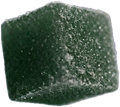
Plum Berry Runtz | Indica
"These gummies are a lifesaver. I deal with menopause insomnia and these work perfectly to help me fall asleep and stay asleep. I wake up feeling good and not groggy." — Tirzah H.
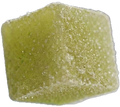
Granddaddy Sour OG | Indica
"I have trouble sleeping because of anxiety and racing thoughts but these slow it down and I'm out like a light!" — Amy G.
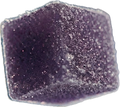
Cotton Candy Kush | Indica
"The best sleep ever! It also helps with my chronic pain and anxiety. This has been a game changer for me!" — Rachel R.
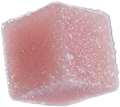
Watermelon Sorbet | Hybrid
"Generally used for sleep and slight anxiety. Has worked wonders for me and my overall mood throughout the day." — Jonathan
Microdose Gummies | Wild Berry
"Definitely helps with the sleep (highest Garmin score ever). What I like best is that the calm, adaptable, joyful mood lasts at least into the next day." — Lissa C.
The Bottom Line
Cannabis works best for sleep when you treat it as a system, not a shortcut.
That means low doses of THC — start at 2.5–3mg — combined with CBD and CBN when possible, in a full-spectrum product that preserves the entourage effect. Edibles for sustained, all-night support, taken about an hour before bed. And cannabis as part of a broader routine, not a replacement for one: consistent sleep and wake times, a cool dark bedroom, no screens for an hour before bed.
Quality sleep isn't just about falling asleep faster. It's about the deep, restorative rest your body needs to repair tissue, consolidate memories, flush waste, and regulate hormones. Cannabis, used well, can help get you there.
Which brings us back to 3:47 AM. Next time you're staring at that ceiling, the answer probably isn't a higher dose of anything — it's the right compounds, working together, given enough time to do their job quietly. Your brain already knows how to sleep. Sometimes it just needs a gentle nudge in its own language.
Works Cited
- Fioroni, S., and D. Foy. "Americans Sleeping Less, More Stressed." Gallup, 15 Apr. 2024, news.gallup.com/poll/642704/americans-sleeping-less-stressed.aspx.
- Walker, Matthew. Why We Sleep: Unlocking the Power of Sleep and Dreams. Scribner, 2017.
- Reynolds, J. R. "Therapeutical Uses and Toxic Effects of Cannabis Indica." The Lancet, vol. 1, 1890, pp. 637-638.
- Hauglund, N. L., et al. "Norepinephrine-Mediated Slow Vasomotion Drives Glymphatic Clearance during Sleep." Cell, vol. 188, no. 3, 2025, pp. 606-622.e17. https://doi.org/10.1016/j.cell.2024.11.027.
- Krywko, J. "Sleeping Pills Stop the Brain's System for Cleaning Out Waste." Ars Technica, 20 Jan. 2025, arstechnica.com/science/2025/01/how-sleeping-pills-interfere-with-the-brains-internal-cleaning-mechanism/.
- Erland, L. A., and P. K. Saxena. "Melatonin Natural Health Products and Supplements: Presence of Serotonin and Significant Variability of Melatonin Content." Journal of Clinical Sleep Medicine, vol. 13, no. 2, 2017, pp. 275-281.
- Brown, R. E., et al. "Control of Sleep and Wakefulness." Physiological Reviews, vol. 92, no. 3, 2012, pp. 1087-1187. https://doi.org/10.1152/physrev.00032.2011.
- Cousens, K., and A. DiMascio. "(−)Δ9-THC as an Hypnotic: An Experimental Study of Three Dose Levels." Psychopharmacologia, vol. 33, 1973, pp. 355-364. https://doi.org/10.1007/BF00437513.
- Sulak, Dustin. Handbook of Cannabis for Clinicians: Principles and Practice. W. W. Norton, 2021.
- Babson, K. A., et al. "Cannabis, Cannabinoids, and Sleep: A Review of the Literature." Current Psychiatry Reports, vol. 19, no. 4, 2017, article 23. https://doi.org/10.1007/s11920-017-0775-9.
- Tassinari, C. A., et al. "The Neuropsychiatric Syndrome of Δ9-Tetrahydrocannabinol and Cannabis Intoxication in Naive Subjects." Marihuana and Medicine, 1999. Study conducted 1976.
- Shannon, S., et al. "Cannabidiol in Anxiety and Sleep: A Large Case Series." The Permanente Journal, vol. 23, 2019, article 18-041.
- Gates, P. J., et al. "The Effects of Cannabinoid Administration on Sleep: A Systematic Review of Human Studies." Sleep Medicine Reviews, vol. 18, 2014, pp. 477-487. https://doi.org/10.1016/j.smrv.2014.02.005.
- Maddison, K. J., et al. "Is There a Place for Medicinal Cannabis in Treating Patients with Sleep Disorders? What We Know So Far." Nature and Science of Sleep, vol. 14, 2022, pp. 957-968. https://doi.org/10.2147/NSS.S340949.
- Arnold, J. C., et al. "A Sleepy Cannabis Constituent: Cannabinol and Its Active Metabolite Influence Sleep Architecture in Rats." Neuropsychopharmacology, vol. 50, no. 3, 2025, pp. 586-595. https://doi.org/10.1038/s41386-024-02018-7.
- Gannon, W. E., et al. "Novel Formulation of THC and CBN in a Repeat-Action Tablet Improves Objective and Subjective Measurements of Sleep." American Journal of Endocannabinoid Medicine, n.d.
- Russo, E. B. "Taming THC: Potential Cannabis Synergy and Phytocannabinoid-Terpenoid Entourage Effects." British Journal of Pharmacology, vol. 163, no. 7, 2011, pp. 1344-1364.
- Nuutinen, T. "Medicinal Properties of Terpenes Found in Cannabis Sativa and Humulus Lupulus." European Journal of Medicinal Chemistry, vol. 157, 2018, pp. 198-228. https://doi.org/10.1016/j.ejmech.2018.07.076.
- Fonsêca, D. V., et al. "Nerolidol Exhibits Antinociceptive and Anti-Inflammatory Activity: Involvement of the GABAergic System and Proinflammatory Cytokines." Fundamental & Clinical Pharmacology, vol. 30, no. 1, 2016, pp. 14-22. https://doi.org/10.1111/fcp.12166.
- Gulluni, N., et al. "Cannabis Essential Oil: A Preliminary Study for the Evaluation of the Brain Effects." Evidence-Based Complementary and Alternative Medicine, vol. 2018, 2018, article 1709182. https://doi.org/10.1155/2018/1709182.
- Kesner, A. J., and D. M. Lovinger. "Cannabinoids, Endocannabinoids and Sleep." Frontiers in Molecular Neuroscience, vol. 13, 2020, article 125. https://doi.org/10.3389/fnmol.2020.00125.
- Low, Z. X. B., et al. "Cannabinoids: Emerging Sleep Modulator." Biomedicine & Pharmacotherapy, vol. 165, 2023, article 115102. https://doi.org/10.1016/j.biopha.2023.115102.
- D'Angelo, M., and L. Steardo, Jr. "Cannabinoids and Sleep: Exploring Biological Mechanisms and Therapeutic Potentials." International Journal of Molecular Sciences, vol. 25, no. 7, 2024, article 3603. https://doi.org/10.3390/ijms25073603.
- Liu, Y. M., et al. "Cannabidiol Exerts Sedative and Hypnotic Effects in Normal and Insomnia Model Mice Through Activation of 5-HT1A Receptor." Neurochemical Research, vol. 49, 2024, pp. 1150-1165. https://doi.org/10.1007/s11064-024-04102-2.
- Ferguson, S., and T. Catlett. "Does Cannabis Help with Sleep?" Healthline, 6 Nov. 2024, www.healthline.com/health/medical-marijuana/cannabis-for-sleeping.
View Citations
Works Cited
Numbers reflect order of first appearance. Sources cited multiple times retain their original number throughout.
This article is for informational purposes only and should not be considered medical advice. Always consult with a healthcare provider before starting any new treatment regimen, especially one involving cannabis.